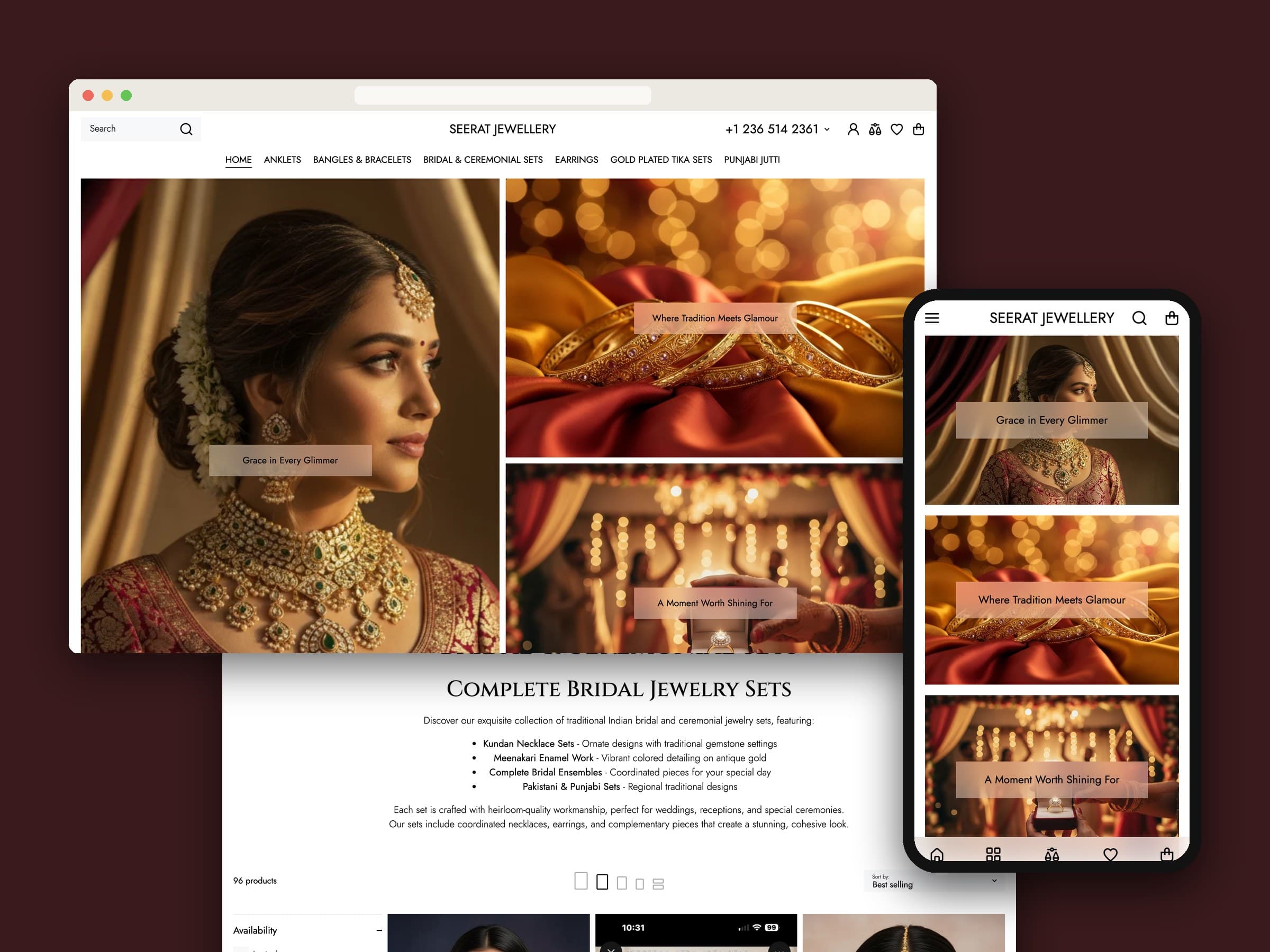
Seerat Jewellery sells traditional Indian jewellery out of Surrey, BC: kundan and meenakari sets, bangles, jhumkas, tikka and Punjabi jutti. We designed and set up the online store on Shopify. It has a storefront built for wedding and festival shopping, a catalogue you can browse by occasion and piece, product pages that answer the practical questions, and a journal that explains the craft behind the jewellery.
01 — At a glance
| Client | Seerat Jewellery, traditional Indian jewellery |
|---|---|
| Where | Surrey, BC, shipping across Canada, priced in Canadian dollars |
| What we built | Shopify storefront, catalogue structure, product pages, journal, contact and about pages |
| Stack | Shopify (Wokiee theme), Shop Pay, Judge.me reviews |
02 — The brief
People rarely buy this kind of jewellery on a whim. They buy it for a wedding, a reception or a festival, usually to go with a particular outfit, and they want to see how a set looks when it's worn before they spend money on it. The store had to feel like an occasion from the first screen, and then get out of the way so people could find the right piece and buy it.
That gave us one rule for every page:
The jewellery does the talking. Everything else on the page is there to help someone choose it and buy it.
03 — An occasion from the first screen
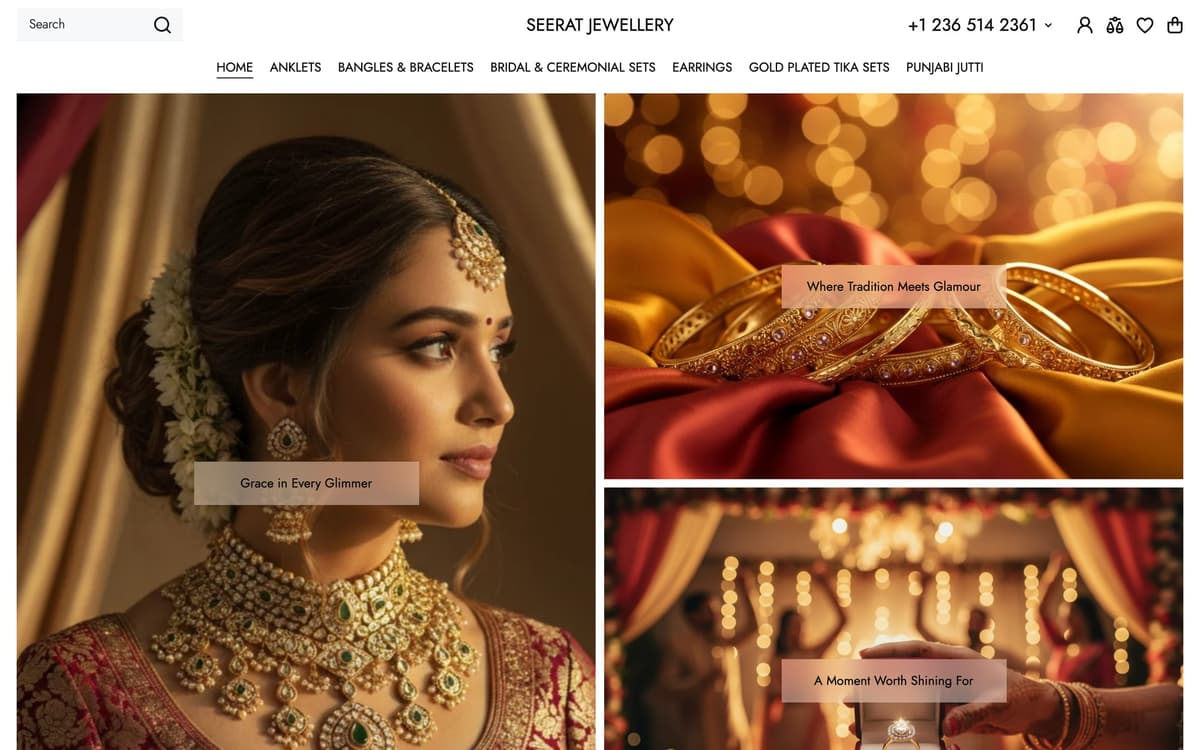
The home page opens with three large images instead of a sales banner: a bride in a full kundan set, gold bangles on red silk, and a ring at a celebration. Each has a short line over it, like "Grace in Every Glimmer" or "Where Tradition Meets Glamour". Headings are set in Cinzel, a classical capital face that fits the heritage feel, and the reading text is in Jost, a clean sans-serif. The rest of the page is plain white, so the gold and colour come from the pieces.
Further down, the page runs in the order a shopper thinks: shop by category, featured pieces, current offers, a bangle carousel, what the store promises, the journal, and a contact form for questions and custom orders.
04 — A catalogue sorted the way people shop
The main navigation follows the names customers already use: Anklets (Payal), Bangles & Bracelets, Bridal & Ceremonial Sets, Earrings, Gold Plated Tika Sets and Punjabi Jutti. Every collection page opens with a short guide to what's in it. The bridal page, for example, explains the difference between kundan necklace sets, meenakari enamel work, complete bridal ensembles and regional Pakistani and Punjabi designs.
- Filter and sort. Shoppers can filter by availability and price, and sort by best selling, price or date.
- Compare and wishlist. Pieces can be saved to a wishlist or put side by side, which helps when choosing between two similar sets.
- Search in the header. It's on every page, next to a phone number for people who would rather ask.
- Honest stock. Sold-out pieces stay visible and are clearly marked, so the range is still on show.
05 — Product pages that answer the questions
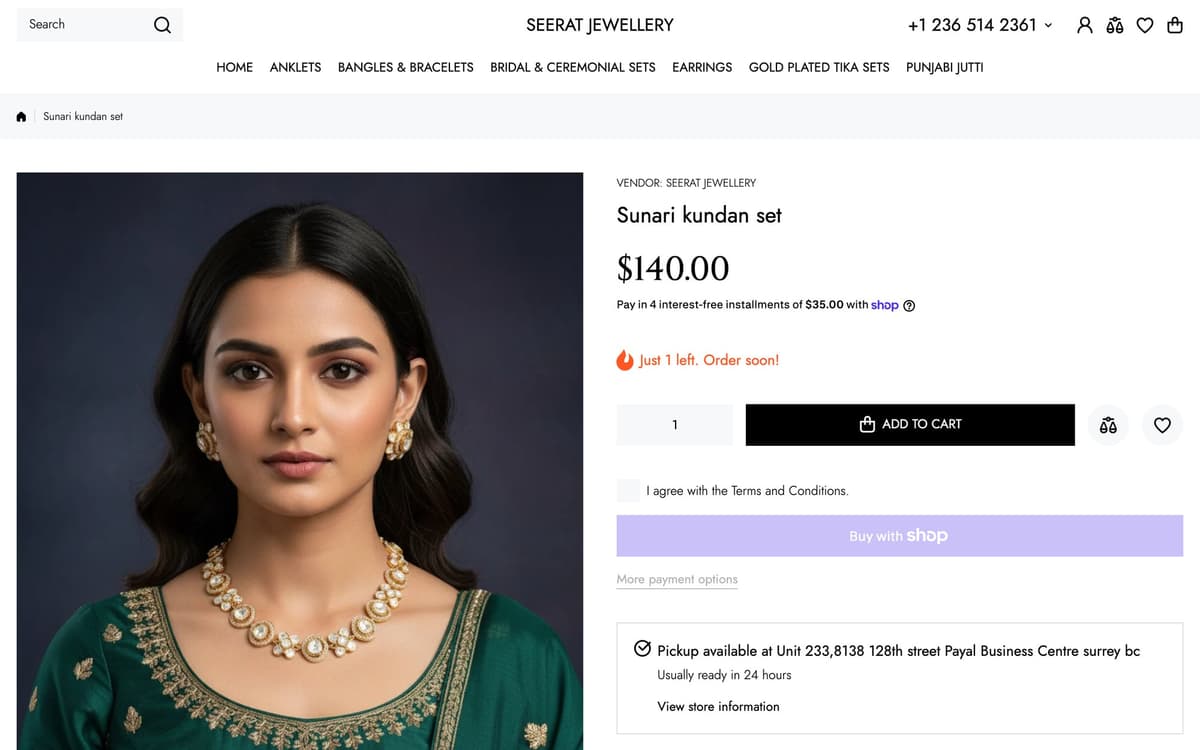
A product page answers the questions a buyer has before they commit. You see the piece on a model, then the price, then a line offering four interest-free instalments through Shop Pay. If only one is left, the page says so. Local pickup is shown right on the page, with the Surrey address and a note that orders are usually ready in 24 hours. Customer reviews run through Judge.me, and a "You Might Also Like" row keeps people browsing.
Checkout is Shopify's own. It takes Visa, Mastercard, American Express, Discover and Diners Club, plus Apple Pay, Google Pay and Shop Pay.
06 — A journal about the craft
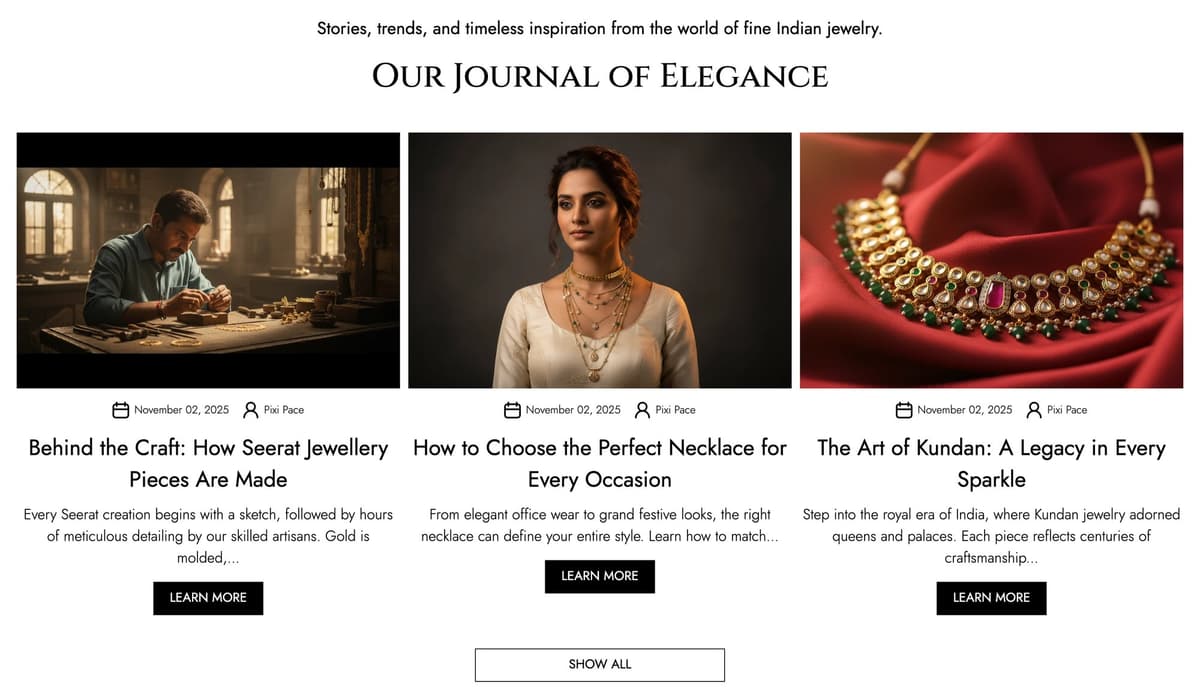
For buyers who are new to it, kundan and meenakari need a little explaining. We wrote the first three journal posts ourselves: how Seerat pieces are made, how to choose a necklace for different occasions, and the history of kundan work. They appear on the home page as well as the blog, so the story sits right beside the products. An About page covers the same ground in short: kundan settings, meenakari enamel and antique finishes.
07 — Made for the phone
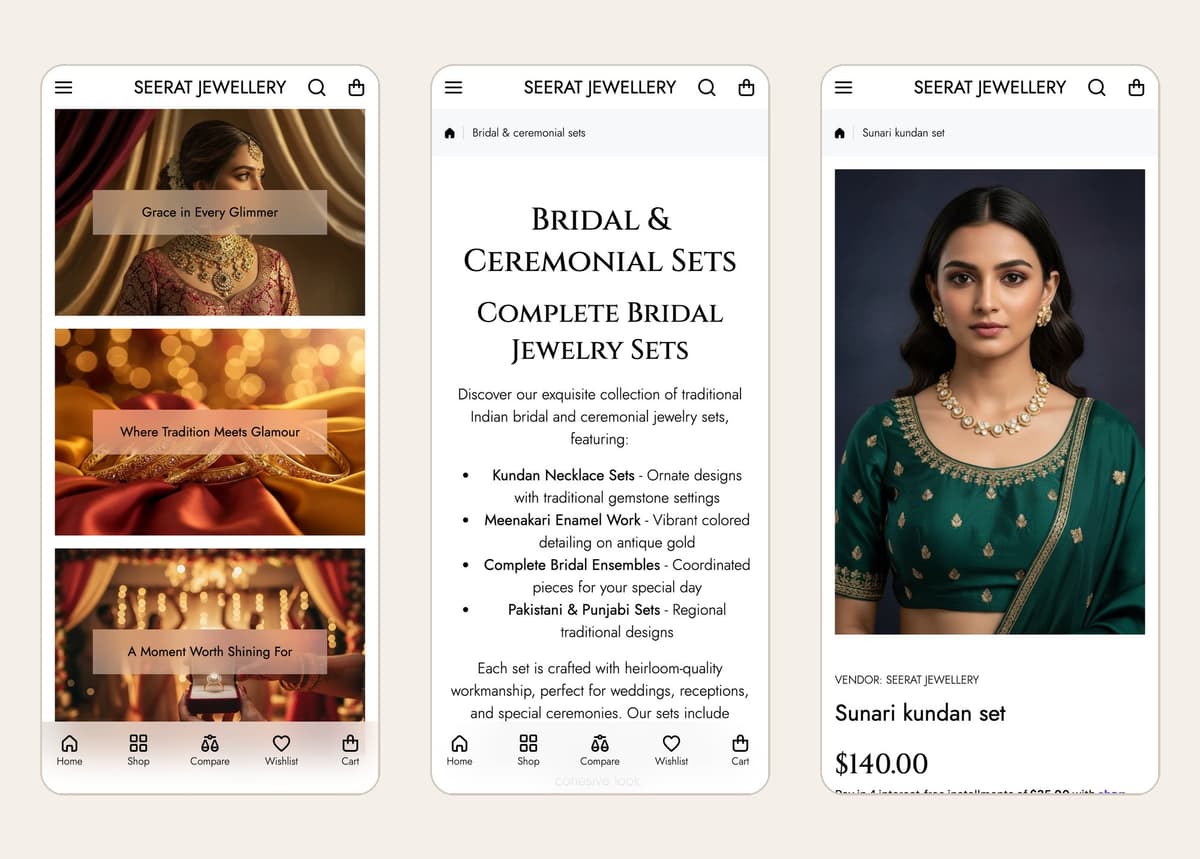
On a phone, the three hero images stack into one scroll. A fixed tab bar at the bottom of the screen keeps Home, Shop, Compare, Wishlist and Cart one tap away. The menu folds into the header, and the collection guides and product images take the full width of the screen.
08 — A store the owner runs
- Built on Shopify. Products, prices, stock, discounts and orders are all managed in Shopify's admin. Nothing needs a developer.
- A growing catalogue. New pieces have gone up regularly since November 2025, and they land in the right collection with no extra work.
- Offers on the home page. Promotional banners, such as a bridal sale or a sets offer, are theme sections the owner can change.
- More than one way to get in touch. There's a phone number in the header, a contact form on the home page, and a contact page with email, WhatsApp and answers to common questions.
The result is a store that looks the part for a wedding purchase and is still simple to run day to day. The jewellery leads, and the owner keeps it stocked.